
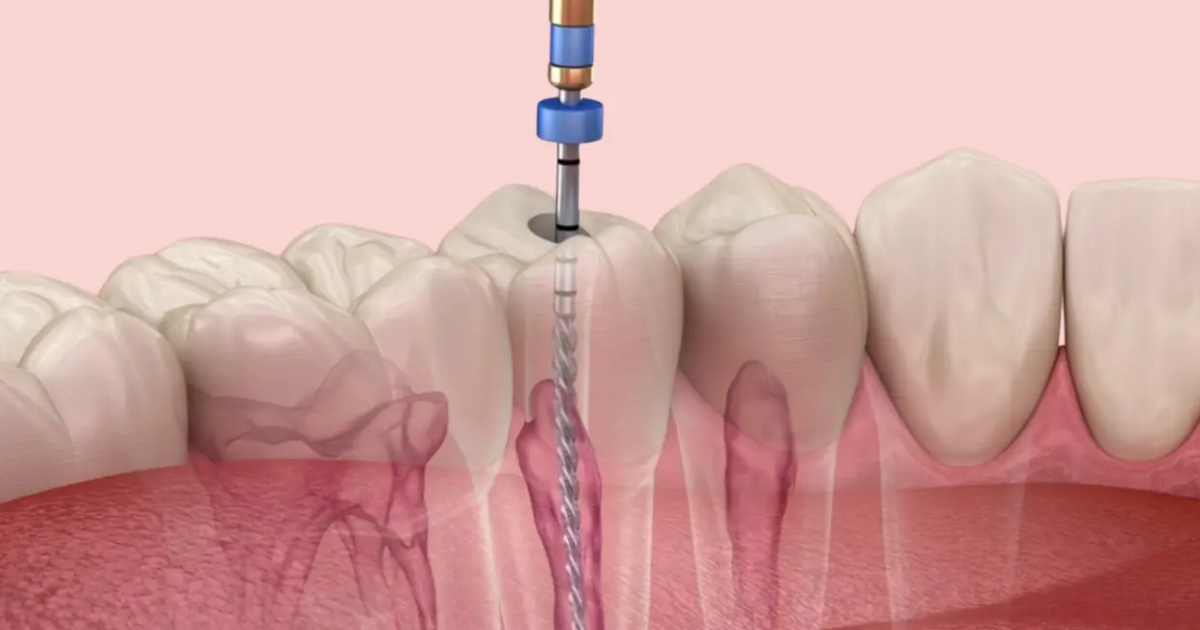
If you are wondering how long does a root canal take, the honest answer is usually about 60 to 90 minutes for a standard appointment. Some simple cases may take less time, while more complex teeth can take longer. Delta Dental notes that root canal treatment itself commonly takes about 90 minutes, especially when multiple canals or infection are involved.
Most root canal treatments are finished in one or two visits, depending on the condition of the tooth and the patient’s situation. The American Dental Association says root canal treatment usually takes one or two office visits, while the American Association of Endodontists says modern treatment can often be completed in one or two appointments.
What Happens During a Root Canal Appointment?
A root canal appointment starts with an exam, dental X-rays, and local anesthesia to numb the area. Once the tooth is numb, the dentist or endodontist places a dental dam to keep the tooth clean and dry. The infected or inflamed pulp is then removed from inside the tooth, which helps stop pain and prevent the infection from spreading.
After removing the pulp, the dentist cleans, disinfects, and shapes the root canals. Then the canals are filled and sealed to protect the inside of the tooth. In many cases, a temporary filling is placed first, and a permanent filling or dental crown is added later. This step is important because the treated tooth still needs strength for chewing.
What Factors Affect Root Canal Treatment Time?
The biggest reason the answer to how long does a root canal take changes is tooth complexity. Front teeth usually have fewer canals, while molars often have several canals that must be carefully cleaned and shaped. A tooth with curved roots, hidden canals, deep decay, or a large infection will naturally take more time than a simple case.
Infection severity also matters. If the tooth has swelling, drainage, or a dental abscess, the dentist may choose to complete treatment over two visits instead of rushing everything into one appointment. Retreatment can also take longer because old filling material may need to be removed before the canals are cleaned again. Speed is not the goal; predictable healing is.
Does a Root Canal Take Longer for Molars?
Yes, a root canal often takes longer for molars because back teeth usually have more canals and more complicated anatomy. A front tooth may be relatively straightforward, while a molar root canal can require more careful cleaning, shaping, and imaging. That is why two patients can receive the same procedure but spend very different amounts of time in the chair.
This is also where an endodontist may be recommended. Endodontists specialize in treating the inside of teeth and commonly handle complex root canal therapy. Cleveland Clinic describes endodontics as the dental specialty focused on tooth pulp, roots, and related pain or infection. For difficult molars, retreatments, or unusual canal anatomy, specialist care may save time and reduce guesswork.
How Long Does Recovery Take After a Root Canal?
Recovery is usually easier than people expect. Most patients can return to normal daily activities the same day, although the mouth may stay numb for a few hours after local anesthesia. Cleveland Clinic explains that root canal therapy treats infected pulp by removing it, filling the canal, and sealing the tooth, often followed by a crown for protection.
Mild soreness after a root canal is common, especially when biting or chewing, but it should improve as the area heals. Avoid chewing hard foods on the treated tooth until the permanent restoration is finished. So when people ask how long does a root canal take, they should also ask how long the full process takes, including the final crown or filling.
When Should You Call Your Dentist After a Root Canal?
Call your dentist if pain gets worse instead of better, swelling increases, the bite feels too high, or the temporary filling comes loose. Some tenderness is normal, but intense throbbing pain is not something to ignore. A root canal is meant to remove infected tissue and protect the tooth, so ongoing symptoms need professional attention.
You should also keep your follow-up appointment even if the tooth feels fine. The permanent restoration protects the tooth from cracking and helps restore normal chewing. Skipping the crown or final filling is a bad move because the tooth may become vulnerable again. The root canal appointment solves the infection problem, but the final restoration protects the long-term result.
Conclusion
So, how long does a root canal take? For most patients, plan on about 60 to 90 minutes per appointment, with treatment commonly completed in one or two visits. The exact timeline depends on the tooth, number of canals, infection level, and whether the case is simple or complex.
The smartest way to think about root canal treatment is not “How fast can this be done?” but “How carefully can this tooth be saved?” A properly completed root canal can relieve pain, remove infection, and help you keep your natural tooth. Rushing the process is not worth it when precision is what protects your smile.
FAQs
Can I go back to work after a root canal?
In many cases, yes. If your job does not require heavy physical activity and you feel comfortable after the numbness wears off, returning to work is usually realistic. Still, your dentist’s instructions matter most because sedation, infection severity, or additional procedures can change your personal timeline.
Can I eat after a root canal?
Usually, you should wait until the numbness wears off so you do not bite your cheek or tongue. Choose softer foods and avoid chewing directly on the treated tooth until the final crown or filling is placed. If you are still asking how long does a root canal take because you fear downtime, the reality is that the appointment is usually the longest part.
Does a root canal hurt the whole time?
No. Local anesthesia is used so you should not feel the actual procedure. The ADA says there is little to no pain during treatment because local anesthesia is used. Pressure or vibration can happen, but sharp pain should be reported immediately so the dentist can adjust your care.
Is one-visit root canal treatment better than two visits?
Not automatically. One visit is convenient, but two visits may be smarter for infected, difficult, or heavily damaged teeth. The best option depends on diagnosis, X-rays, canal anatomy, and symptoms. A dentist who recommends two visits is not necessarily slow; they may simply be choosing the safer path for the tooth.